

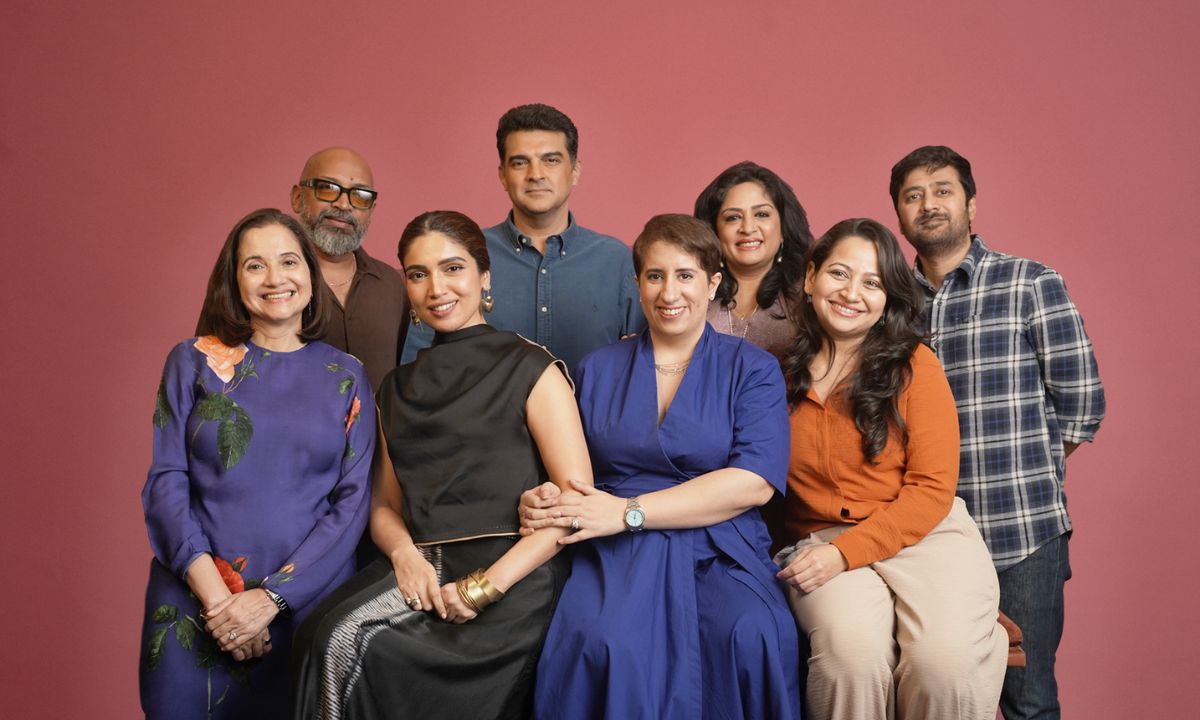
Female representation in Indian entertainment has improved over the years, but we still have a long way to go. And the new O Womaniya! Report championed by Prime Video, researched and curated by Ormax Media and produced by Film Companion Studios, helps us understand the current scenario better. The report reveals crucial statistics to understand gender equality in the entertainment space. Interestingly, the report carefully examines not just on-screen representation but also behind-the-scenes representation. Like the previous report, the 2025 report also has a toolkit with the purpose of identifying gender disparity issues at the nascent stage and accordingly finding solutions to tackle them.
About The O Womaniya! Report 2025
This year, the report analysed 122 films and series released in 2024 across nine languages- Hindi, Tamil, Telugu, Malayalam, Kannada, Bengali, Gujarati, Punjabi and Marathi. O Womaniya! report strives to comprehend the progress of female representation in the Indian entertainment industry, but also points out the loopholes that need to be addressed.
Now, Let’s Talk Facts!
The drop in female representation behind the camera came as a setback, with only 13% of the HOD positions analysed across key departments of direction, cinematography, editing, writing, and production design held by women, as compared to 15% in the previous report. The key departments taken into consideration were creative designing, direction, editing, writing and cinematography.
Female representation in the HOD positions is massively lacking in theatrical releases (4%), but the numbers are comparatively better in streaming films and series, 18% and 24%, respectively. Female representation at an HOD level in the Southern film industries is noticeably lower, too. Compared to that, the Hindi film industry stands at 24%.

Also Read: O Womaniya! Report Reveals Realities Of Female Representation In Indian Entertainment Industry
O Womaniya! report also suggests that we need more male allies. Why? Because women in charge tend to hire more women!

What’s O Womaniya! Toolkit All About!
O Womaniya! Toolkit was introduced in last year’s report to help writers, creators and producers tackle the gender disparity problems in film and in stories from an early stage. The toolkit includes four questions around the female characters’ importance to drive the narrative, stories normalising objectification and violence against women, the significance of at least one female character in making decisions crucial to the story, and understanding if female characters are opposing the viewpoints of the male characters. Out of 115 films and series (excluding non-fiction and documentaries) that were analysed in this segment, only 37 passed the toolkit.
Female Representation In Trailers!
Well, an important topic of discussion because in most trailers, female characters are often chucked out. O Womaniya! report studies the talk time of male and female characters (including transgender characters), and the results were interesting. The percentage remained unchanged in 2024 (29%). Theatrical films were again lagging at 21%, whereas streaming films and series were 36%.
As per the report, there were 22 films and shows that had over 50% female trailer talk time. The list includes- Follow Kar Lo Yaar, Crew, Do Patti, Bhakshak, Call Me Bae, Heeramandi and more.
Some Positive Takeaways
2024 saw a significant increase in the percentage of women in senior management positions. Compared to 2023, there was a 6 percentage point increase in 2024 (18%).

Now, the report reveals that there has been a much-needed shift in access to gender positive corporate policies. Numbers look good in departments like Equal Pay Police (48%), Gender Recruitment and Retention Policy (48%), Flexible working hours, maternity leaves (52%) and the most important Anti-Sexual Harassment Policy (84%). It’s a relief to see that there is some amount of effort to create a healthy working environment for women working in the film industry. Hope this continues!
Stuti Ramachandra, Director & Head of Production and Post, International Originals, Prime Video, India, conveyed a strong message to uplift female representation in Indian entertainment. Highlighting the importance of this report, she said in her foreword, “Real change requires collective and sustained effort. As an industry, we must ensure that more women have a seat at the table, and that doors remain open for both emerging and established talent. Scroll through these pages, and you’ll find data, yes – but also momentum. You’ll see where women are gaining ground, and where we still have to punch through. My ask is simple: read it, question it, share it – and then let’s do the hard work together.”
More About O Womaniya! Roundtable
O Womaniya! 2025 roundtable featured Guneet Monga, Bhumi Pednekkar, Siddharth Roy Kapur, Rahul Ravindran, Shazia Iqbal, Suresh Triveni and Stuti Ramachandra.
During the conversation with Anupama Chopra, the panellists also shared interesting anecdotes and insights from their experience. Sharing thoughts on why women-led movies are not encouraged in the mainstream media very often, director Suresh Triveni said, “I have constantly heard that I make many women-centric films, and there is a certain perception that when women are in the lead, it’s got to do with some issue. That’s where you have a film, Lokah, that is mainstream and has a female lead. I think we need to go towards that direction just to empower this because success is a rule of this entire game. Thankfully, we have streaming. We need more of Lokah or The Girlfriend to happen.”
Filmmaker Rahul Ravindran quoted a relatable example to explain how gender bias impacts women while acknowledging male privilege. “A woman is putting a lot on the line every time she chooses a theatrical film that she is fronting. She is not just putting her career on the line, but many women on the line, because it becomes a cautionary tale. It shuts the door on so many of her peers, and that is absolutely unfair. It’s like I always say – when a man drives badly on the road, he is a bad driver. But when a woman drives badly on the road, ‘women are bad drivers.’ So you are almost letting an entire gender down. We men, don’t have that pressure. As a man, if you deliver a flop, you are not letting your entire gender down. But I know the number of doors it will shut if one woman takes that punt and delivers a flop. Ten other women would go, ‘Oh, I thought my project was greenlit,’ but it is shelved now,” shared the filmmaker.
During the discussion, director Shazia Iqbal added, “Women have to support women, but there are so many men in the industry that they too have to support women.”
Watch the entire discussion here:
Read the complete report on O Womaniya! Report