

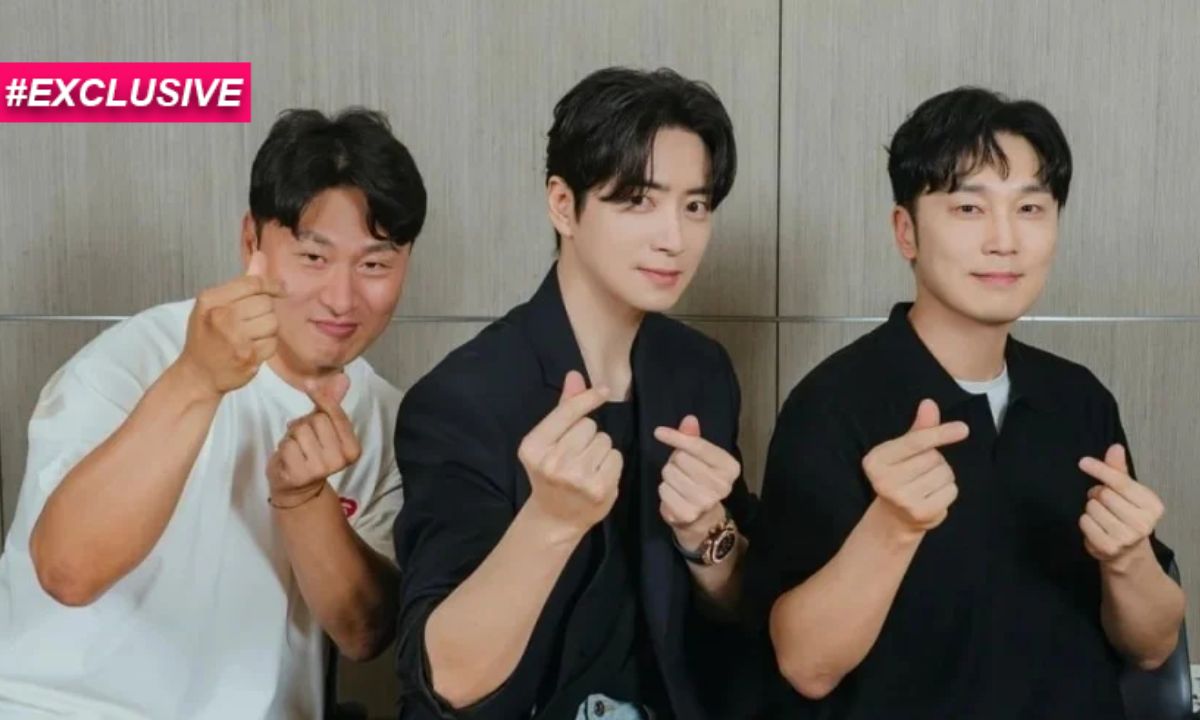
Office K-dramas have always been a favourite among fans, and The Ordinary Jackpot on Prime Video has been winning hearts too. Starring Lee Jun-hyuk, Seo Hyun-woo, Oh Dae-hwan, and others, the series is based on Seo In-ha’s web novel of the same name. It follows an employee whose life takes an unexpected turn after he wins the lottery, which gives him a new sense of confidence at work. With the show gaining love from audiences, we got the chance to speak to the cast about their characters, the popularity of K-dramas, and more. Read on!
Lee Jun-hyuk

1: Early on, you faced a lot of pressure about not being a ‘star’ yet, but you perfectly shut them down. Now you’re playing Eun-tae, a guy who also decides to stop pleasing everyone and starts acting boldly. Did it feel deeply familiar to play someone who finally blocks out the noise and stands his ground?
A: Eun-tae is human, after all. Until now, I’ve played many characters who didn’t feel quite like ordinary people. I’ve often taken on unusual roles and delivered more pronounced, distinctive performances. With Eun-tae, I felt a little more at ease because he felt like a real person.
2: I absolutely loved the scene where Eun-tae realises he’s rich and just completely screams. Your reaction was so raw and perfect that it totally took me by surprise! It made me wonder: at this point in your career and your life, what is something in the real world—outside of acting—that would make you scream with that exact same kind of pure joy or shock?
A: While filming, I actually bought lottery tickets every week, but the most I ever won was 5,000 won. Rather than something that would make me scream with pure joy, I think getting a role is like winning the lottery. My very first project felt that way, as did the projects that came along when I wondered whether I’d ever get another opportunity to act. Even when I received the call about The Roundup: No Way Out, I was so amazed that I wondered why they had chosen me.
Seo Hyun-woo

3: Viewers were really struck by that one specific conversation scene with Lee Joon-hyuk, because instead of showing a cliché villain, it revealed how deeply human Jun-ho is. In that moment when his mask drops, how did you balance all those raw emotions to perfectly pull off that scene?
A: One particularly interesting aspect of the scene in which Jun-ho talks with Gong Eun-tae over a glass of soju at a barbecue restaurant is the heavy rain pouring outside. The dim lighting, the artificial rain created with a rain rig, and the shared glasses of soju all contribute to the atmosphere and emotions of the scene before a word is even spoken.
I felt that emphasising the dialogue too heavily might make the emotions feel excessive, so my goal was to focus on naturally delivering the flow of the dialogue and conveying its underlying intentions. At the beginning, I gave the conversation an offbeat rhythm that contrasted with Gong Eun-tae’s tempo. Once Assistant Manager Yang began to break down emotionally, I shifted to a more steady, on-beat rhythm. Through these changes in pacing, I wanted to build tension while maintaining a balance between the performances.
Oh Dae-hwan
4: Seon-hyuk comes from a very painful place—the quiet heartbreak of working hard but still getting overlooked. How did you gear up for a role like this? Did you pull from your own life experiences to help bring out his frustration?
A: Rather than drawing on specific experiences or memories, I think I reflected on the feelings I’ve experienced as a father and the head of my family, knowing that while work is important, my family comes first.
5: K-dramas have a massive global reach, and workplace stories are particularly loved worldwide. In your opinion, what is the secret appeal of the Korean office genre, and why do you think it hits so hard across different cultures?
Lee Jun-hyuk: “I think it’s because these dramas tell stories about people trying to understand one another and find common ground at work.” He pointed out that workplace hierarchies, dealing with bosses and colleagues, and understanding each other without saying a word are experiences that office workers everywhere can relate to. The actor also highlighted the line, “We know how hard we fought,” adding that people who have faced tough times together often understand each other’s struggles without needing to say much.
Oh Dae-hwan: “I think it comes down to a sense of community.” He believes workplace dramas show how people support each other, make up for each other’s weaknesses, and grow stronger together instead of facing every challenge alone. The actor also noted that this sense of community is something people across the world can relate to.
Also Read: Exclusive: Jeong Soon-won On Our Sticky Love’s Global Success, Working With Jung Hae-in, And More!
Seo Hyun-woo: “Although workplace environments vary from country to country, I believe stories about earning a living and navigating the workplace can resonate with people all over the world.” He pointed out that workplace hierarchies, the desire for promotions, and conflicts with colleagues are experiences that people share across cultures. The actor also added that Korean workplace dramas stand out because of their unpredictable energy, where people try to remain respectful but sometimes let their emotions get the better of them.
Also Read: Exclusive: Dayoung Wants To Break This Myth About Female Idols: “I’d Love To Erase The Idea That…”